 Whatsapp:0086-155-1557-1373
 Русский язык





How Cocoa Powder is Made in Industry?
2026-05-11 by Lisa
How cocoa powder is made in industry is a key process in the global food manufacturing sector, especially in chocolate and bakery ingredient production.
Cocoa powder is produced through a series of industrial steps that transform raw cocoa beans into a fine, stable cocoa powder. Understanding this process is crucial for manufacturers who want to provide high-quality cocoa powder.
What Is Cocoa Powder?
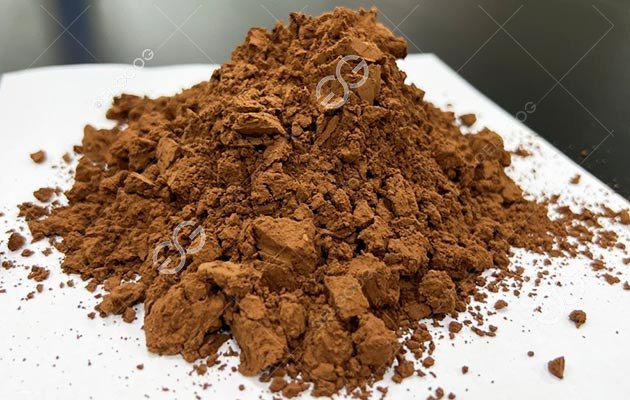
Cocoa powder is a dry food ingredient produced from processed cocoa beans after the extraction of cocoa butter. It is obtained by grinding pressed cocoa cake into a fine powder, resulting in a concentrated cocoa product with strong aroma and characteristic color. This ingredient is widely used in food manufacturing because it provides chocolate flavor without adding significant fat content.
In the food industry, cocoa powder is valued for its versatility, long shelf life, and consistent performance in large-scale production. Depending on the processing method, it can be classified as natural cocoa powder or alkalized (Dutch-processed) cocoa powder, each offering different taste profiles and functional properties for different applications.
To better understand the complete production process, it is necessary to go through each key processing stage step by step.
1.Cocoa Bean Cleaning
The production process begins with washing and sorting the cocoa beans to remove impurities such as stones, dust, and shell fragments. Only high-quality cocoa beans are allowed to enter the production line. This is a crucial step in ensuring product quality.
2.Roasting, Peeling and Grinding Process
The next step in how cocoa powder is made in industry is roasting, peeling and grinding. The roasted cocoa beans are broken into smaller pieces, and the shells are separated from the nibs. This process requires a cocoa roasting machine, cocoa peeling machine and a winnowing system to ensure high purity cocoa nibs.
The cleaned nibs are then transferred into a grinding system, where they are processed into a smooth cocoa mass. Due to the naturally high cocoa butter content, the material gradually turns into a thick, fluid-like paste known as cocoa liquor. This intermediate product serves as the foundational material for both cocoa butter extraction and cocoa powder manufacturing.
3.Pressing and Cocoa Cake Formation
The production process of cocoa powder key stage in how cocoa powder is made in industry is cocoa butter extraction. The cocoa liquor is processed using a hydraulic cocoa butter press machine, which separates cocoa butter from solid cocoa cake.
The remaining cocoa cake contains low fat content and is the primary raw material for cocoa powder. This stage is essential because it determines the final fat level and quality of the cocoa powder.
4.Cocoa Powder Grinding and Milling
Once cocoa cake is produced, it is sent to a pulverizing or milling system. Industrial grinding equipment breaks the cocoa cake into ultra-fine powder particles. Airflow classifiers and sieving systems ensure uniform particle size and smooth texture.
This is the final transformation stage in how cocoa powder is made in industry, where raw cocoa materials are converted into finished cocoa powder ready for packaging and distribution.
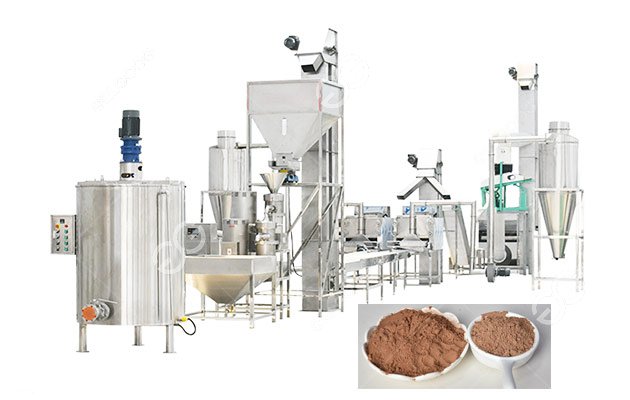
Key Equipment in Cocoa Powder Production Line
* Cocoa bean cleaning machine
* Cocoa roasting machine
* Cocoa peeling and winnowing system
* Cocoa grinding machine (cocoa liquor production)
* Hydraulic cocoa butter press
* Cocoa cake pulverizer
* Fine powder milling and sieving system
* Packaging machine
These machines work together in a continuous and automated system to ensure efficiency, hygiene, and consistent product quality.
Understanding how cocoa powder is made in industry helps businesses design better production systems and improve product quality. From raw cocoa beans to fine cocoa powder, each stage requires specialized equipment and precise control.
An industrial cocoa powder production line not only improves efficiency but also ensures stable quality and large-scale output. For companies entering the cocoa processing industry, investing in a fully automated system is a key step toward long-term success.
Message